
François-André Philidor
The strongest player in the world for nearly fifty years, opera composer and author of "pawns are the soul of chess": Philidor's career and doctrine.
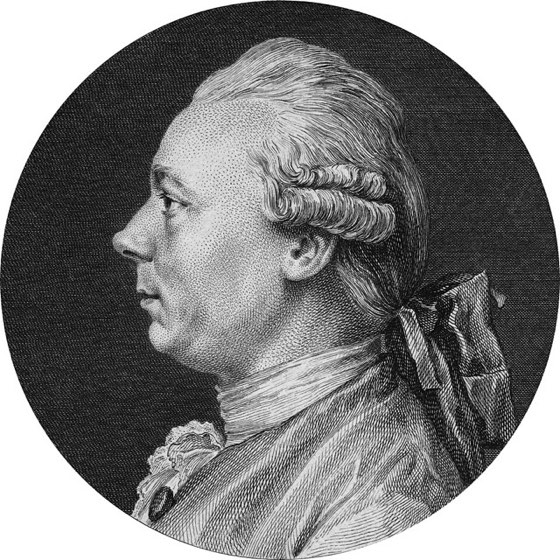
- Born
- September 7, 1726
- Died
- August 31, 1795
- Country
- France
At twenty-two Philidor wrote the book that served as the standard chess manual for over a century, and put in it a line every chess player knows. He was also, incidentally, one of the most performed comic-opera composers of his day.
Court musician, café player
He was born in Dreux on 7 September 1726 into a dynasty of court musicians. His father and brother composed; so did he. He left around twenty comic operas, including Blaise le savetier in 1759, Le Sorcier in 1764 and Tom Jones in 1765, his biggest success outside France.
Chess he learned at the Café de la Régence in Paris, under Kermur de Légal, then the strongest player there. It took him about three years to surpass him. He crossed paths with Rousseau and Diderot, who quotes him in Rameau’s Nephew: apart from Légal and Philidor, he writes, nobody in the place understands a thing.
In 1747, in London, he beat Philippe Stamma, the other great name of the game, on deliberately unfavourable terms: he gave Stamma the white pieces in every game and counted draws as wins for him. He won anyway. From then until his death, nearly fifty years, nobody in the world played better.
One word needs care: he was not world champion. The title did not exist before 1886 and Wilhelm Steinitz. Philidor was the strongest known player of his time, which is not quite the same thing.
The ending is bleak. A constitutional monarchist on a court pension, he left France in December 1792 with his name on the list of émigrés. He was refused a return passport even after Thermidor. He died in London on 31 August 1795, in exile, without seeing his family again.
The book, and the line
L’Analyze des échecs appeared in London in 1749, published by subscription. Around seventy editions up to 1871, translated into English, German, Spanish, Italian, Russian and Yiddish. It was the first work to treat opening, middlegame and endgame as one reasoned system.
On page nineteen he writes:
The pawns. They are the soul of chess.
A curiosity worth knowing: in French, the line is Philidor’s, word for word — l’âme des échecs, literally “the soul of chess.” The famous English quote in that exact form, pawns are the soul of chess, is another matter. The first English translation, in 1750, did not say soul at all: it said the very Life of this Game. The soul wording surfaced later, and the historian Edward Winter never traced who first wrote it. The irony is that this anonymous version renders Philidor’s French more faithfully than the period translation did.
His doctrine
Before him, a pawn was an obstacle you traded for a tempo. Philidor was the first to make pawn structure the strategic skeleton of the game.
He describes the pawn chain and its weakness, which is its base. He identifies the isolated pawn and the backward pawn as lasting weaknesses. He treats the passed pawn as the decisive endgame asset. Above all he makes the pawn advance a plan in itself: the phalanx moves forward as a unit, supported by the pieces. That completely reverses the thinking of his era, in which pawns served the pieces.
He also recommends blocking and immobilising the opponent’s pawns before looking for an attack. It is a prophylactic instinct avant la lettre — the word itself would come from Nimzowitsch, a century and a half later.
The International Chess Magazine called him the father of modern chess in 1888. Richard Réti adds a useful qualification: Philidor was a positional player stranded in a century of gambits, and combinations were not his strength. True, and it takes nothing away.
What carries his name
Three things carry his name, and two of them are not his.
The Philidor Defence, 1.e4 e5 2.Nf3 d6, he does recommend in his book, and the logic fits his doctrine: d6 holds the e5 pawn with a pawn rather than a piece. Except that no surviving game of his shows him playing it, and Winter notes that the origin of the name remains unknown. Its modern reputation comes from one detail: Philidor advocated the aggressive follow-up 3.d4 f5, which theory now regards as dubious. Without that idea the defence turns passive and shuts in the f8 bishop.
Philidor’s mate is the smothered mate. He analysed and popularised it in 1749, but Lucena had described it in 1497, two hundred and fifty years earlier.
The Philidor position in rook endgames, on the other hand, really is his: he analysed it in 1777. It is the most profitable endgame in the whole repertoire to learn, because it saves half a point again and again.
The principle has two stages. While the pawn is not yet on the sixth rank, the rook sits there and denies the enemy king access. As soon as the pawn advances, the rook drops to the first rank and checks from behind forever. The pawn no longer shelters the king, and the game is drawn.
A game played with his eyes shut
In May 1783, in London, Philidor played three simultaneous games without sight of the board. He won two and drew one. Witnesses, by tradition, signed sworn statements, convinced that posterity would refuse to believe it.
Blindfold play was thought dangerous at the time. Diderot wrote to him in April 1782 begging him to stop, calling it inconceivable to risk one’s reason for nothing, and reported Légal’s testimony: after a single game played without seeing the board, the old master found his head so tired that it was the first and last time of his life.
Here is the game against Count Brühl, won in an hour and twenty minutes, blindfold.
Look at how he wins. On move two he plays c6 to prepare d5 and build a pawn centre. He pushes e4, then f5. He trades pieces systematically. And he finishes with two connected pawns nothing can stop. His own doctrine, applied to the letter, without looking at the board.
What you can steal from him
Look at the pawn structure before you calculate. It dictates the plan. The pieces adapt afterwards.
Never push a pawn without knowing what permanent weakness you create behind it: a hole, a backward pawn, an exposed chain base.
A pawn chain is attacked at its base, not its head.
And learn the Philidor position. Half an hour of work, and it will pay you half points for years. That is Prologue’s logic too: understanding why a move works beats remembering that it goes there.
Frequently asked questions
Was Philidor world champion?
No, the title did not exist in his lifetime. The first official world championship was Steinitz against Zukertort in 1886, more than ninety years after his death. Philidor was regarded as the strongest player in the world from 1747 until his death in 1795, close to fifty years.
What did Philidor actually write about pawns?
The exact line, on page nineteen of L’Analyze des échecs in 1749, is “the pawns. They are the soul of chess.” The much-quoted English phrasing, “pawns are the soul of chess,” is a later reformulation: his own 1750 English edition said “the very Life of this Game.”
Is the Philidor Defence a good opening?
It is solid but passive, and no longer a front-line equalising weapon at the top level. Philidor recommended it with the aggressive follow-up 3.d4 f5, which modern theory considers dubious. Without that idea Black concedes space and shuts in the f8 bishop. It remains playable, particularly through the modern move order.
What is the Philidor position?
It is a drawing method in the rook and pawn versus rook endgame, which he analysed in 1777. The defending king occupies the queening square and the rook holds the sixth rank to stop the enemy king advancing. As soon as the pawn reaches that rank, the rook drops to the first and checks from behind indefinitely.