
José Raúl Capablanca
World champion from 1921 to 1927, unbeaten for eight years and the supreme master of endgames: Capablanca's career, style and openings.
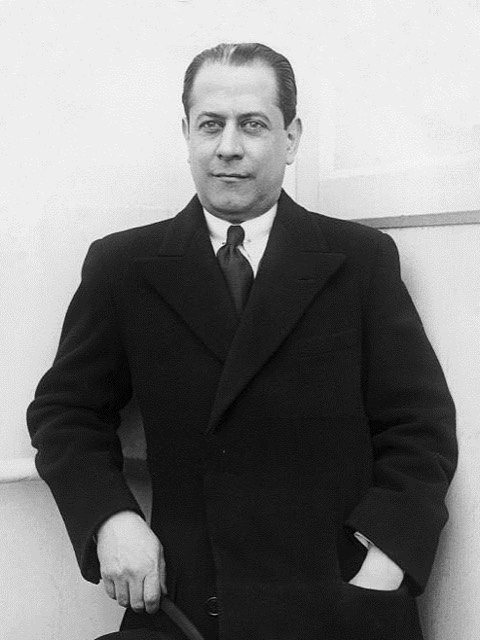
- Born
- November 19, 1888
- Died
- March 8, 1942
- Country
- Cuba
- World champion
- 1921-1927
Between February 1916 and March 1924, Capablanca played sixty-three serious games and lost none of them. Eight years unbeaten, including a world championship match. That figure sums the man up: he did not win by force, he won because he did not go wrong.
From Havana to the title
He was born in Havana on 19 November 1888. By his own account he learned the rules at four watching his father play, and noticed that his father had just moved a knight illegally. The story is his own, published twenty-three years after the fact, and nobody can corroborate it — but it is too good not to tell.
What is documented is the match against Juan Corzo, champion of Cuba, in November and December 1901. Capablanca was twelve at the start and turned thirteen two days in. He lost the first two games, then turned it around: four wins, three losses, six draws. A small irony: the year of that match is given wrongly as 1900 almost everywhere, and the error comes from the index of his own book.
In 1913 the Cuban foreign ministry gave him a post with no defined duties. He was paid to be famous and to represent Cuba as he travelled. That is what funded his career.
The world title came in 1921 in Havana, against Emanuel Lasker. Capablanca won four games, lost none, and Lasker abandoned the match after the fourteenth. Six years later in Buenos Aires he lost it to Alexander Alekhine after thirty-four games, the longest world championship match in history until 1984.
He never got it back, and the irony is perfect. The London Rules of 1922, obliging any challenger to raise a purse of ten thousand dollars, had been drafted by Capablanca himself. Alekhine simply asked him to meet his own condition. Capablanca never raised the money.
He collapsed on 7 March 1942 at the Manhattan Chess Club while watching a game. He died the next day of a cerebral haemorrhage, aged fifty-three.
The machine
As early as 1921 the American Chess Bulletin described him as a veritable chess machine. The nickname stuck.
Lasker put it differently: he had known other great masters, he said, but only one genius. Botvinnik found the best image: when a great pianist plays, we do not hear separate notes, we hear a musical picture; in the same way, Capablanca did not make separate moves.
In practice his game rests on simplicity, clarity and an intuition that let him play fast and accurately without long calculation. At Cleveland in February 1922 he faced a hundred and three opponents in a simultaneous display and scored a hundred and two wins and one draw in eight and a half hours. He had not played for eight months.
Two corrections are needed, because the two most famous quotations attributed to him are both problematic.
The first, “I see only one move ahead, but it is always the correct one,” is not his. Edward Winter devoted an article to it: the earliest source attributes it to Charles Jaffe, not to Capablanca. It circulates everywhere under his name regardless.
The second, on the need to study endgames before anything else, is genuinely his — but it is not in Chess Fundamentals, where everyone places it. It comes from his Last Lectures, published in 1966, twenty-four years after his death. The reasoning is worth keeping: an endgame can be studied on its own terms, whereas openings and middlegames only make sense in relation to the endgame they lead to.
He wanted to change the rules
After the Moscow tournament of 1925, Capablanca published a reform proposal. He feared what he called draw death: with theory advancing, he thought, the best players would eventually become unable to separate themselves, and chess would go the way of draughts.
His solution was Capablanca chess: a ten-by-eight board and two new pieces, the archbishop combining bishop and knight, the chancellor combining rook and knight. He tested the format extensively with Edward Lasker, who reported that their games rarely lasted beyond twenty-five moves.
His openings
After his 1909 match against Marshall he never opened an openings book again. He played the Queen’s Gambit from both sides and the Ruy Lopez with White.
What really carries his name is the freeing manoeuvre in the Queen’s Gambit Declined, and it deserves a moment because it solves a problem you meet yourself. In the QGD, Black’s light-squared bishop is boxed in by his own pawns. The manoeuvre frees it through a series of exchanges — the knight goes to d5, trades the enemy bishop, then trades the other knight — until the push e5 finally opens the bishop’s diagonal. The line is played so often that it has its own code in the opening classification.
Marshall lays a trap
New York, 23 October 1918. Frank Marshall unveils a novelty on move eight in the Ruy Lopez: a pawn sacrificed for an attack, what we now call the Marshall Attack.
Capablanca takes everything, absorbs the assault, and walks his king out in the middle of the game.
He wins the game. Legend says Marshall had saved his innovation for eight years to spring it on him: that is false, examples of the move exist from 1893. The Marshall Attack is still played today, but it was refuted at the board, first time out, by a man seeing it for the first time.
The endgame lesson
New York 1924, against Tartakower. This rook endgame is probably the most taught in history, and it comes down to one idea.
Capablanca takes the h-file, then the seventh rank, and creates a passed pawn. Then on move thirty-five he does something that looks absurd: he gives up a pawn to launch his king.
The king marches up the board, the rook holds the seventh, the pawns go through. Capablanca wins in fifty-two moves without ever calculating a combination. It all rests on principles you can apply in your next game.
What you can steal from him
Study endgames first. That is his advice, and his justification is unanswerable: an endgame is learned for itself, while an opening only means something in terms of what it produces afterwards.
Activate your king as soon as the queens leave the board. Most club players keep their king in the corner out of reflex and end up playing a piece down.
Accept giving a pawn for activity in the endgame. Move 35.Kg3 against Tartakower is worth ten pages of theory.
And keep his best-sourced line, the one nobody quotes: you will have to lose hundreds of games before becoming a good player. That is the spirit of Prologue, which makes you play openings rather than recite them.
Frequently asked questions
How long did Capablanca go unbeaten?
A little over eight years, from 10 February 1916 to 21 March 1924. Over that period he played sixty-three serious games, with forty wins and twenty-three draws, including his entire world championship match against Lasker in 1921. The streak ended with a loss to Richard Réti in New York.
Why did Capablanca never get a rematch against Alekhine?
Because of the London Rules of 1922, which he had drafted himself: they required any challenger to raise a purse of at least ten thousand dollars. After winning in 1927, Alekhine required Capablanca to meet that condition. Capablanca never raised the money and the two never met in a match again.
What is Capablanca chess?
It is a variant he devised after 1925, on a ten-by-eight board, with two extra pieces: the archbishop, combining bishop and knight moves, and the chancellor, combining rook and knight. He feared that advancing theory would make top-level chess sterile.
Which Capablanca book should you read?
Chess Fundamentals, published in 1921 and revised in 1934, remains his reference work for an improving player. A common confusion is worth clearing up: his famous line about studying endgames is not in it, it comes from his Last Lectures, published posthumously in 1966.