
Boris Spassky
World champion from 1969 to 1972 and Fischer's opponent at Reykjavik: Boris Spassky's career, universal style and openings.
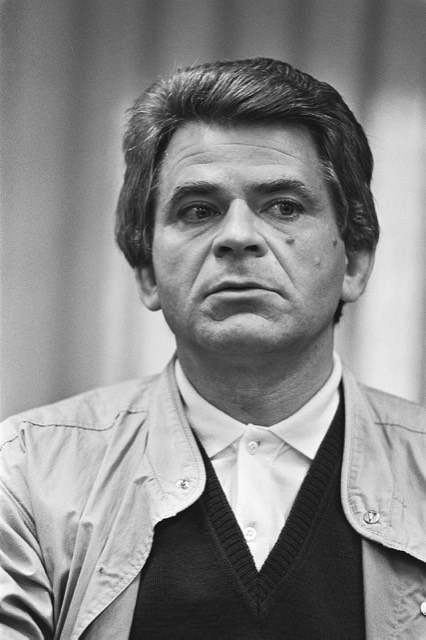
- Born
- January 30, 1937
- Died
- February 27, 2025
- Country
- USSR, then France
- World champion
- 1969-1972
Spassky entered history for a match he lost. It is unfair, and he handled it with an elegance that explains why he is still discussed as something other than the loser of Reykjavik.
A child of the siege
He was born in Leningrad on 30 January 1937. Evacuated in the summer of 1941, he learned the rules of chess at five, on the train taking him away from the besieged city. He spent the war in an orphanage; his parents only rejoined him in 1943 and divorced the following year.
World junior champion at eighteen in 1955, Soviet champion in 1961 and again in 1973. He lost the world championship match against Tigran Petrosian in 1966, 11½-12½, and won it in 1969, 12½-10½.
He left the USSR in September 1976 and settled in Meudon, near Paris. Naturalised French in 1978, he nevertheless continued to play under the Soviet flag until 1984 before representing France. He moved back to Russia in August 2012 and died in Moscow on 27 February 2025, aged eighty-eight.
Reykjavik
The 1972 match against Bobby Fischer is the most discussed event in the history of the game, and Spassky’s role in it is regularly distorted. Here are the facts.
Fischer lost game one to a blunder, then failed to appear for game two over a dispute about the television cameras. Spassky took the forfeit point — that is the rule. But when FIDE president Max Euwe explained that he could go home and remain world champion, and the head of the State Sports Committee ordered him back to Moscow, he declined. He agreed to play game three in a back room, without spectators or cameras, as Fischer demanded.
His own line, later: I saved Fischer when I agreed to play the third game.
After game six, which Fischer won beautifully, the audience applauded. Spassky stood up and applauded with them. Fischer, astonished, called him a true sportsman.
He lost the match 8½-12½. On his return, the Soviet state cut his stipend of two hundred and fifty roubles a month and withdrew his national flag. No gulag, an administrative shunning.
One detail history forgets: before Reykjavik, Fischer had never beaten him. Three wins and two draws for Spassky.
The universal style
His defining characteristic is not having one. Spassky played every type of position without a marked weakness, which the Spanish Wikipedia sums up perfectly: he could beat Mikhail Tal with a king attack and Petrosian with prophylaxis. Each on his own ground.
Fischer, who studied him closely, gives the best description: Spassky sits at the board with the same dead expression whether he is mating or being mated. He added that you never knew whether one of his moves was a blunder or a fantastically deep sacrifice.
That universality was built. Trained first by Alexander Tolush, an aggressive player, he moved to Igor Bondarevsky in the early 1960s and his game became markedly more positional. The mixture produced a player with no comfort zone.
The King’s Gambit of James Bond
Leningrad, Soviet championship 1960, against David Bronstein. Spassky plays the King’s Gambit, which nobody at that level did any more. On move fifteen he puts his knight on d6.
Bronstein cracks and loses in twenty-three moves. Spassky admitted later in his notes that 15.Rf2 was objectively better: 15.Nd6 was calculated to be devastating in practice, against that particular opponent.
This game inspired the opening scene of From Russia with Love in 1963. One point of accuracy: the position on screen reproduces the one after move twenty-two, but the two white pawns on c5 and d4 have been removed. The finish, however, is identical to the real thing.
The game that won him the title
Moscow, June 1969, game nineteen of the match against Petrosian. Spassky has White and attacks the greatest defender in the history of the game.
Twenty-four moves, the shortest decisive game of the match. He beat Petrosian with the style Petrosian did not practise — which is the whole definition of universality.
His openings
The King’s Gambit is his most original marker: nobody else at that level played it for so long. He also left his name to the Leningrad Variation of the Nimzo-Indian Defence, with 4.Bg5, which he played from the beginning to the end of his career and which one of his first coaches introduced him to. He was finally one of the leading practitioners of the Closed Sicilian at the highest level.
A detail consistent with his reputation: he played 1.e4 and 1.d4 alike, with no fixed repertoire.
What you can steal from him
The move that causes your opponent the most problems is often worth more than the objectively optimal one. That is 15.Nd6 against Bronstein, and Spassky owned it.
Do not have a style. What a club player calls their style is often a comfort zone in disguise. Spassky beat Petrosian by attacking and Tal by playing solidly. Play the position on the board, not the one you prefer.
Work on the middlegame before the opening. He became world champion with a less sharp repertoire than his rivals, because his advantage was created after move fifteen. That is also why Prologue teaches you an opening’s plan rather than its theory: what matters is what you do next.
Frequently asked questions
When did Boris Spassky die?
On 27 February 2025, in Moscow, aged eighty-eight. He had left France, where he had lived since 1976, to settle back in Russia in August 2012, after two strokes in 2006 and 2010.
Did Spassky really applaud Fischer at Reykjavik?
Yes. After game six of the 1972 match, which Fischer won with the Queen’s Gambit, the audience began to applaud and Spassky stood up to applaud his opponent. Fischer later described him as a true sportsman. Spassky had also refused to take the match by forfeit when FIDE offered him the option.
What was Boris Spassky’s playing style?
Universal: he played attacking positions and technical positions equally well, with no marked weakness or stylistic signature. He beat Mikhail Tal with a direct attack and Tigran Petrosian with prophylaxis, that is, each on his own ground.
Why did Spassky play the King’s Gambit?
It was his favourite opening and his main originality: an aggressive, risky line nobody was playing at the top level any more. His win over David Bronstein at the 1960 Soviet championship, obtained with this gambit, inspired the chess scene in the film From Russia with Love.